…weld
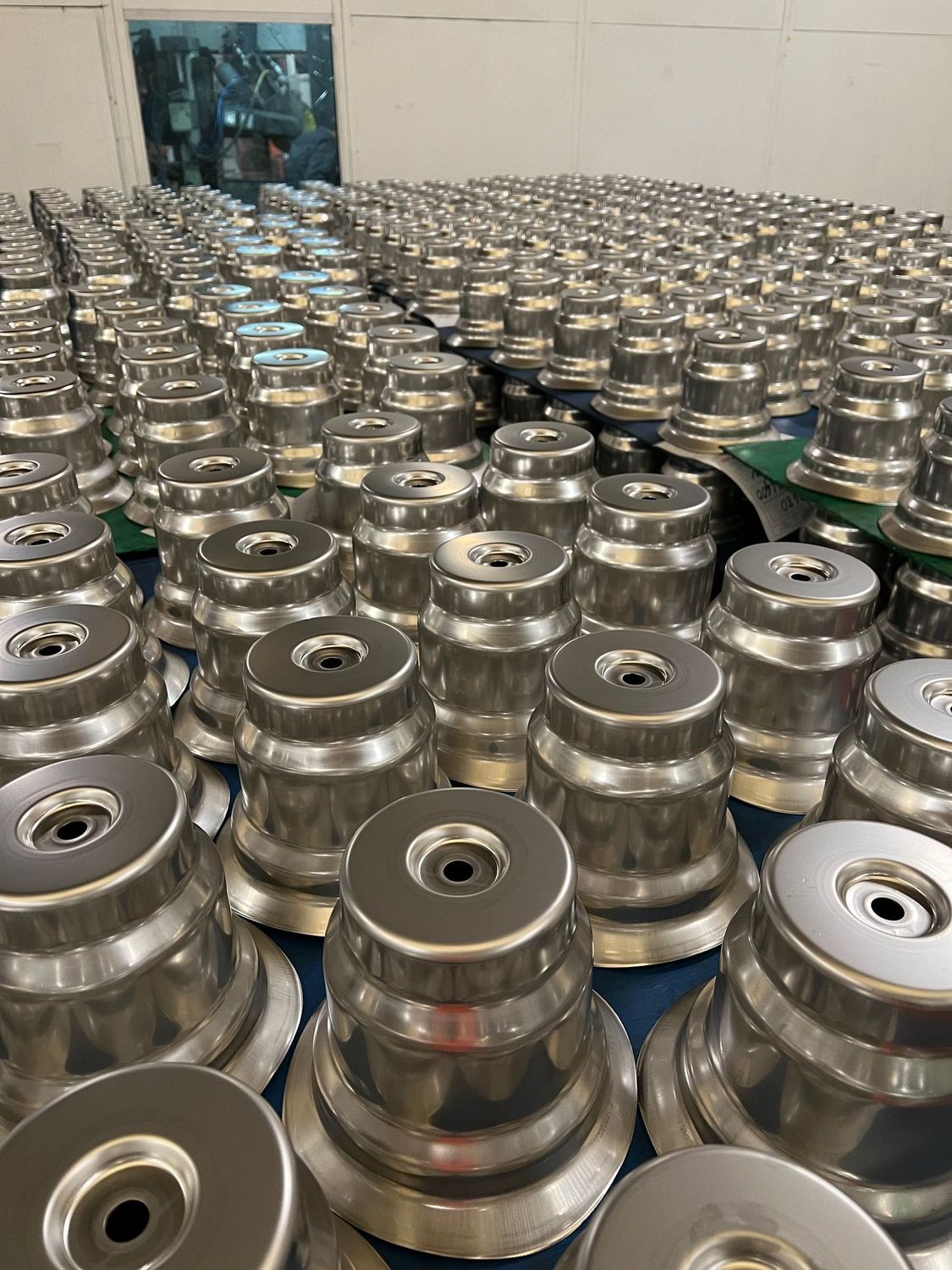
- No weld seam: nothing to rework or inspect
- Naturally watertight, ideal for liquids
- A continuous surface, easier to clean
- Fewer operations per part
For the deepest parts, the operation is repeated in several passes. Between two passes, furnace annealing restores the metal's ductility.


No welds, no assembly: watertight, hygienic, no weak point.
Several passes and intermediate annealing to go beyond the part's diameter.
One tool, millions of parts: high output and little scrap.
Work hardening strengthens the metal as it is formed.
Restrike sizing: dimensions held to the radius, part after part.
Satin finishing, mirror polishing, welding, silver or gold plating, in the same workshop.
Stainless steel combines what you expect from a durable part: strength, hygiene and beauty, with no coating.
Chromium forms a passive layer on the surface that repairs itself. No coating to apply.
A non-porous surface, easy to clean and sterilise: the benchmark in kitchens, laboratories and medical settings.
It withstands impact, heat and time. A stainless steel part lasts for decades.
It polishes to a mirror finish, takes satin or brushed finishes, and accepts silver and gold plating.
Stainless steel is recycled without loss of quality, and already contains a large share of recycled material.
Austenitic grades such as 304 stretch without breaking: ideal for deep shapes.
| Grade | Family | Strengths | Typical uses |
|---|---|---|---|
| 304 (18/10) | Austenitic · 1.4301 · 18% Cr, 10% Ni | Excellent deep drawing ability, food contact, mirror polish; the tableware benchmark | Tanks, bowls, cups, technical parts, flatware, hollowware |
| 430 (18/0) | Ferritic · 1.4016 · 18% Cr, nickel-free | Magnetic, so induction-compatible; nickel-free, more economical | Cookware bases, household appliances, decorative parts |
Every operation around deep drawing is done on the same site: your parts leave finished.
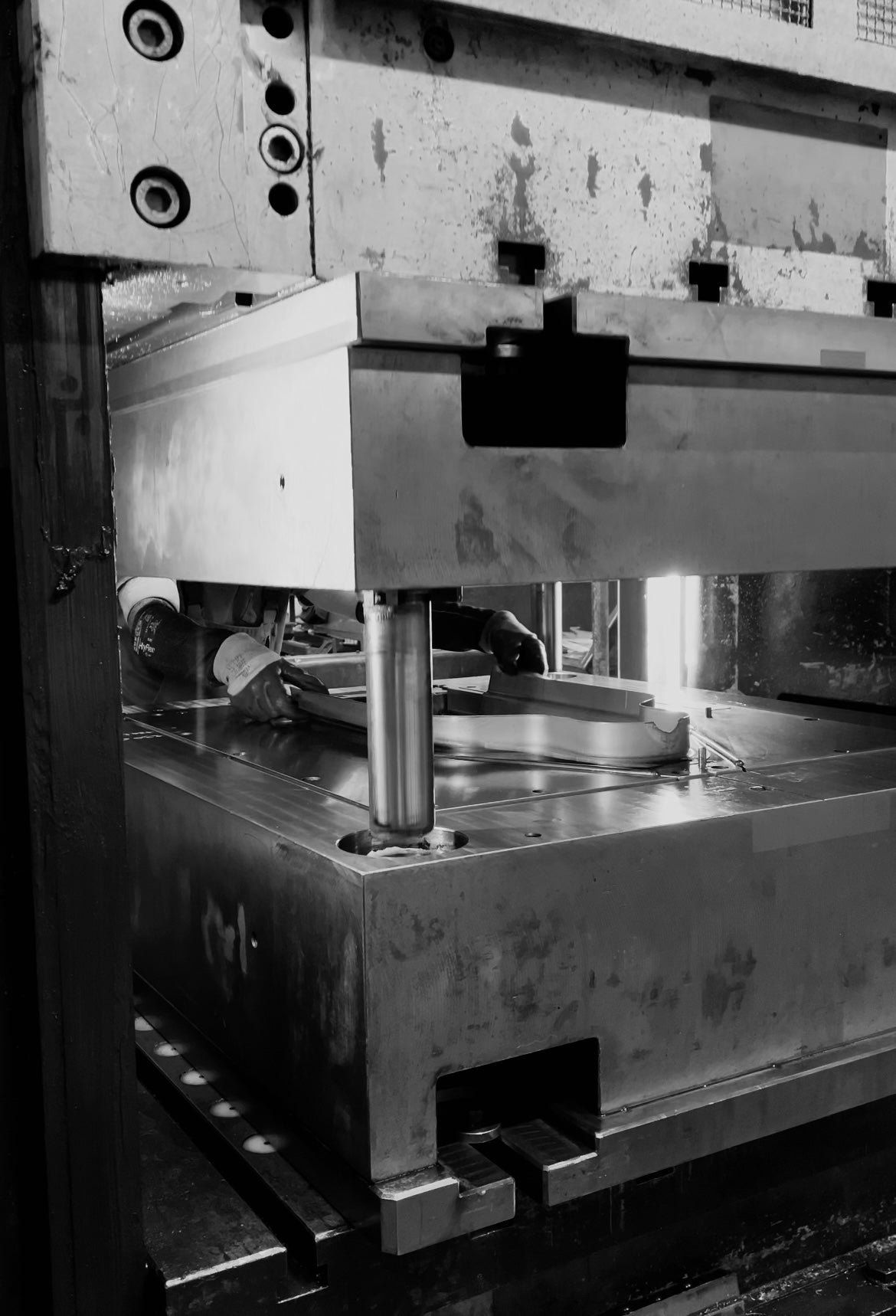
It is a cold forming process that turns a flat sheet, the blank, into a one-piece hollow part, using a punch, a die and a blank holder. It is called deep drawing when the depth of the part becomes large relative to its diameter: the part is then formed in several passes, with annealing between passes if needed.
We mainly draw two grades: 304 stainless steel, known as 18/10 in tableware, and 430, known as 18/0. The austenitic 304 offers the best deep drawing ability and mirror polish; the ferritic, magnetic 430 is induction-compatible. For another grade, our engineering office studies feasibility.
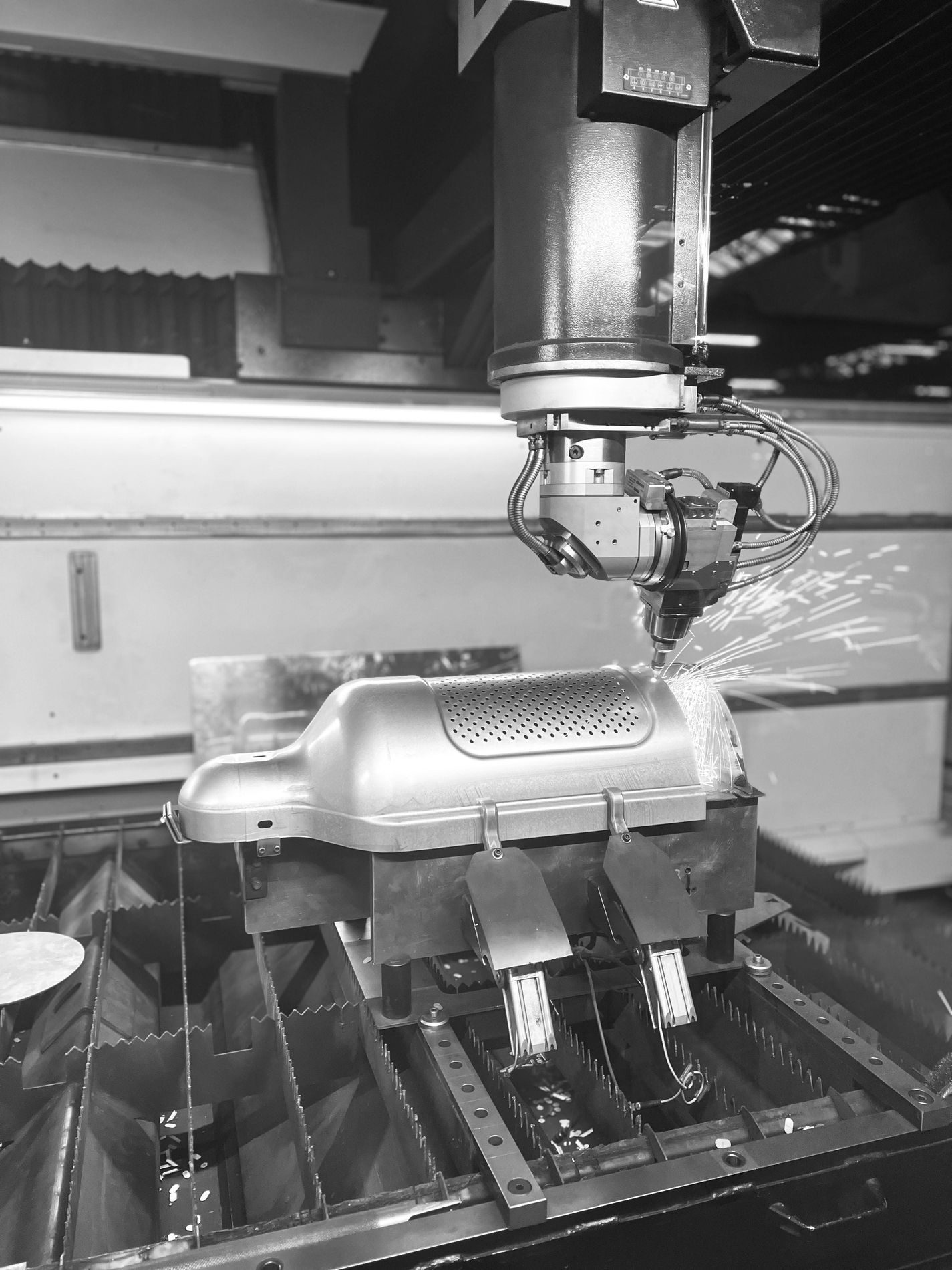
In deep drawing we form stainless steel and aluminium, from sheet up to 4 mm thick, for parts up to 500 mm tall. In 3D laser cutting, thicknesses run from 1 to 5 mm, on formats up to 2,000 mm, for parts up to 700 mm and 10 kg. Usual runs go from a few hundred to several hundred thousand pieces. Beyond these limits, our engineering office studies feasibility with you.
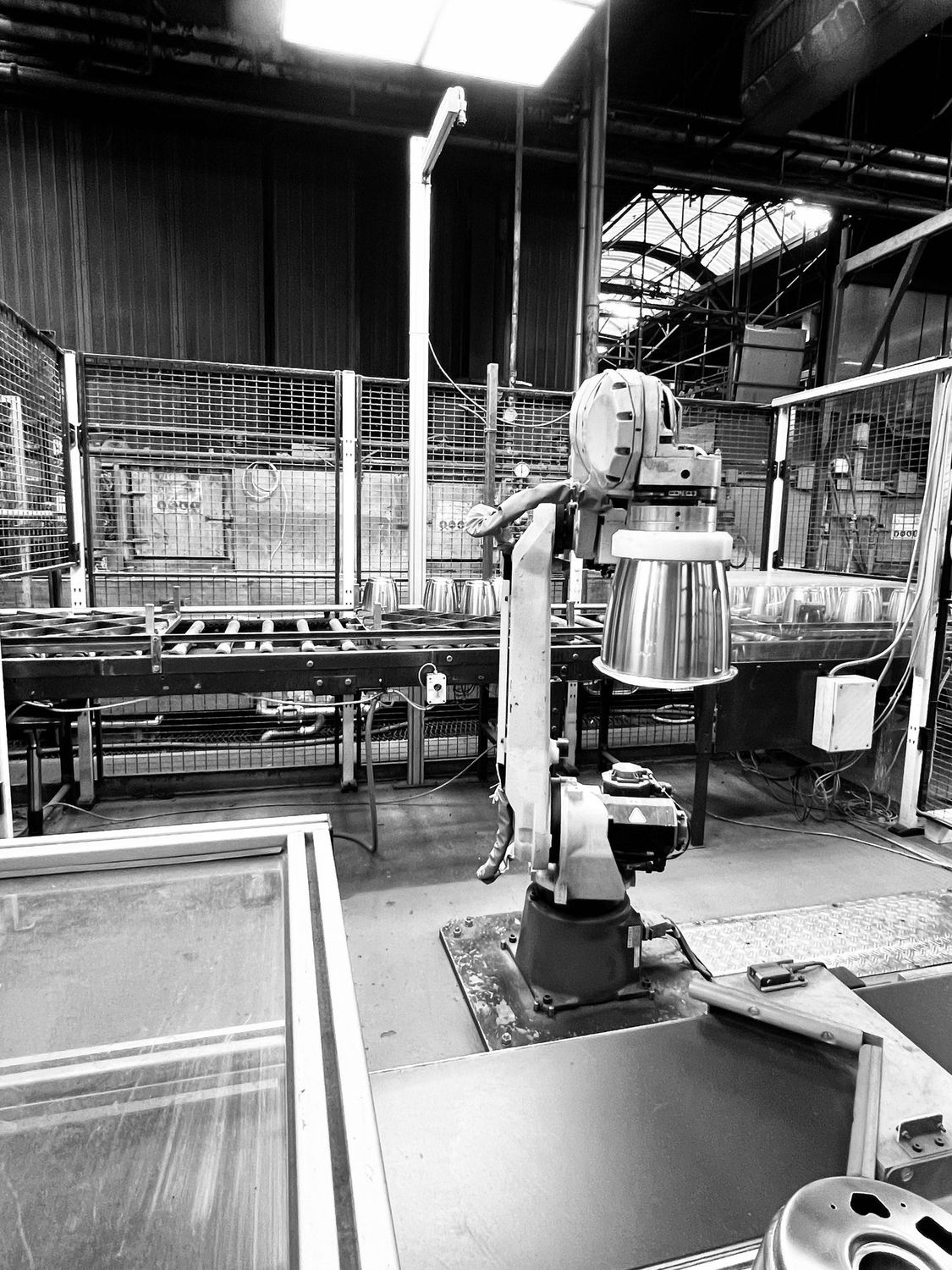
Our industrial setup is built for series production: 53 presses and 28 robots, for around 10 million stainless steel parts a year in Vire. Before tooling, shapes can be validated with metal 3D-printed prototypes.
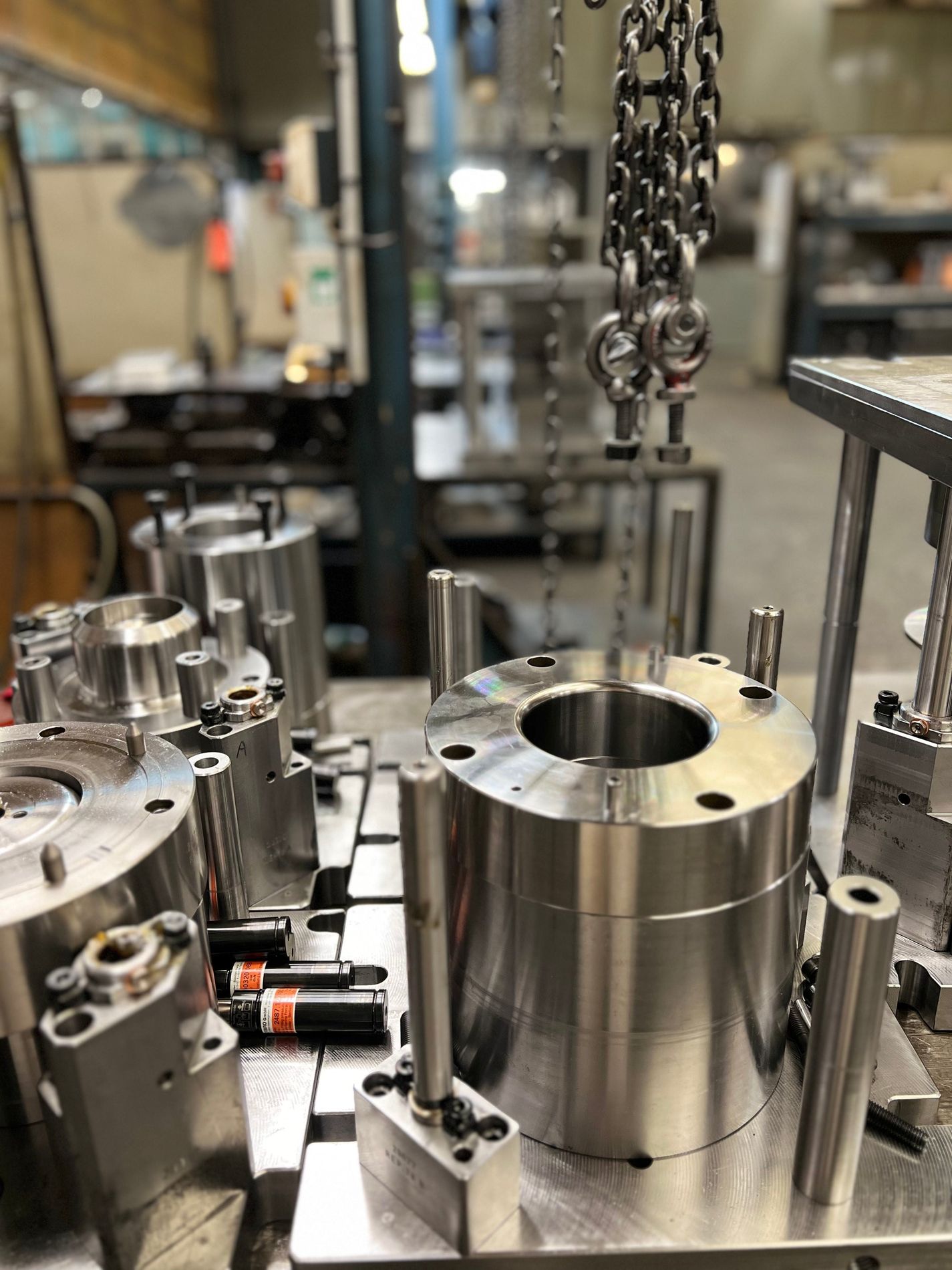
Our engineering office designs the tools in CATIA and simulates drawing pass by pass. The tools are then made and maintained in our Vire workshops.
Trimming, 3D laser cutting, punching, curling, laser and TIG welding, satin finishing, polishing to a mirror finish, silver and gold plating, marking and tolerance inspection: your parts leave the same site finished.
Yes. We sign a non-disclosure agreement before any drawings are exchanged, and manufacture white label for many clients.