
Glazing porcelain: dipping, spraying and inspection
Glaze is a thin layer of glass that forms on porcelain during firing. It makes it smooth, glossy or matt, and protects the decoration. Applying it takes as much precision as forming.
What glaze is
Glaze is prepared from mineral materials ground and suspended in water. In firing, it melts and forms a glassy layer that bonds to the body.
Dipping
The bisque-fired piece is dipped in the glaze bath, then drained. The porosity of the piece draws in the water and fixes an even layer.
Spraying
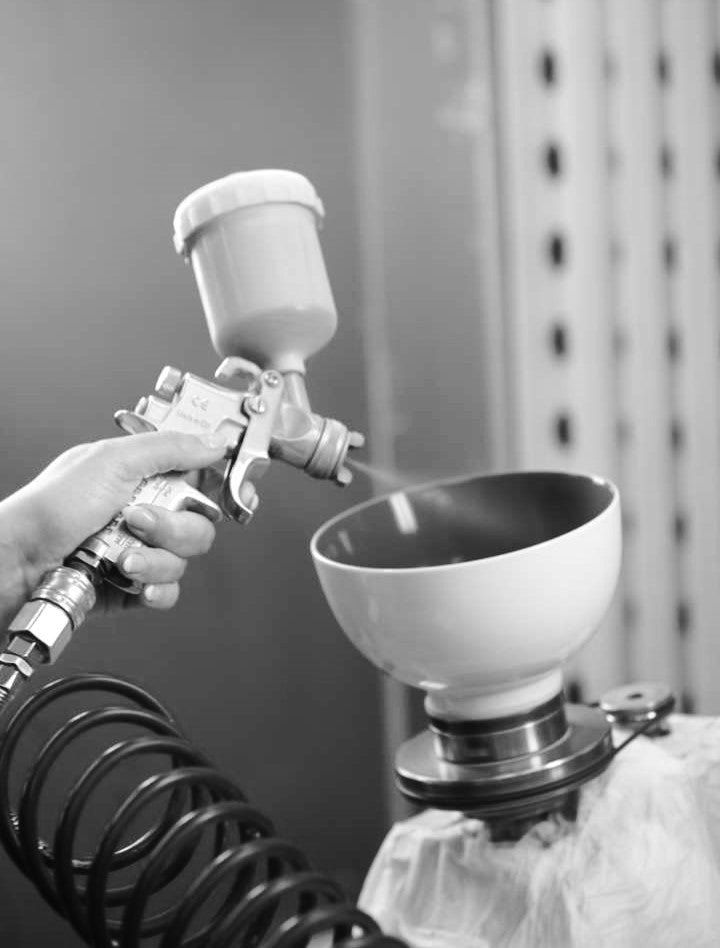
For large pieces or shapes that do not suit dipping, glaze is sprayed with a gun in a booth. Thickness is set by the number of passes.
Thickness
Too thin, the glaze leaves a rough surface; too thick, it runs or crawls in firing. Thickness is checked continuously on the line.
The foot
The foot of the piece is wiped or waxed so it stays unglazed: otherwise the piece would stick to the kiln shelf.
Gloss, matt, coloured
The same process applies a white gloss glaze, a matt glaze or a coloured glaze. Each shade is approved on a sample before production.
Why is the foot not glazed?
The piece stands on its foot in the kiln: glazed, it would stick to the support.
Dipping or spraying?
Dipping covers quickly and evenly; spraying allows gradients and suits relief.
Defects to avoid
Bubbles, bare spots, runs, crawling, pinholes: they come from glaze preparation, application or firing, and are caught at inspection.